
Berlin Central Station
Berlin’s central station is a modern multi-level station designed with easy bike access in mind. The station has large elevators suitable for cyclists. Staircases are equipped with bike channels, making it easy to push bikes up or down.
Designing for Seamless Bike Access
Berlin’s central station aimed to address the need for a modern, bike friendly hub in a growing city with high cycling demand. The stations’ design prioritizes seamless, integrated access to various modes of transport, yet train stations often lack infrastructure to accommodate cyclists. With increasing numbers of commuters choosing bikes for a part of their journey, Berlin recognized the need to make cycling to the station convenient and safe. To enable easy bike access, Berlin added large elevators for cyclists and equipped staircases with bike channels. This design connects cycling with train access, reduces barriers and promotes sustainable mobility.
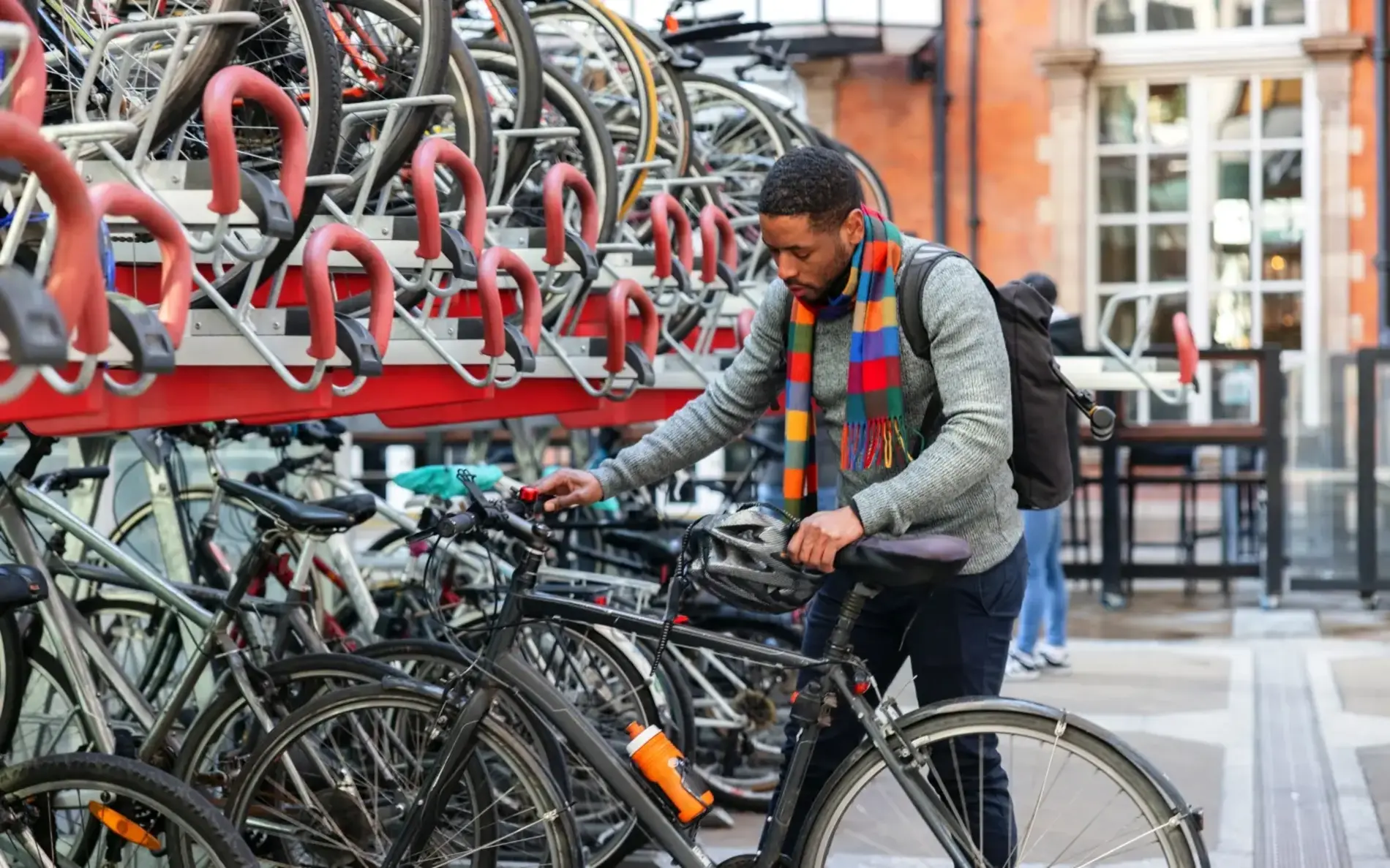
This practice achieves the objective of bike-friendly access through cyclists-friendly infrastructure. Large elevators accommodate cyclists with ease, while staircases have bike channels for efficient movement between levels, encouraging integration of cycling with public transport. With this practice the station is promoting biking as an easy access mode. Train stations across Germany, including main station in Berlin also created more than 15.000 parking spaces in cooperation with the Federal Ministry for Economic Affairs and Climate Action (BMWK).
Enhancing Integration and Accessibility
The station created a highly connected transport network, making cycling a convenient option for station access. Large elevators, bike channels on staircases, and clear signage make station access efficient, encouraging more cyclists to use the station. This practice contributes to the increase rate of cycling in Berlin. Accessibility of train platform offers for a quick multi-modal transport and supports the efforts for a more sustainable mobility.
Services and Digital Incentives to Encourage Cycling
Berlin Hauptbahnhof offers other services to attract individuals coming to the station by bike. For those who prefer having their bike repaired by expert they offer a quick bike repair, all while you are on a train. This service is extremely convenient, as it offers no waiting times both at the drop-off and at the pick-up. Repairs can be booked online; the bike can be parked at the appropriate station in the morning and picked up again in the evening repaired. Furthermore, cycling in different municipalities is associated with an app. This app can be used to collect cycled kilometres and exchange them for rewards. By providing special services like this, Berlin Hauptbahnhof attracts even more cyclists to their station.
The main stations’ bike-friendly practices are exemplary for regions seeking to integrate cycling with public transport. The station’s bike repair service is particularly notable, offering commuters a way to maintain their bikes without waiting, by offering online booking and a convenient drop-off/pick-up system. This approach makes daily cycling and public transport even more attractive. Additionally, the cycling app, which tracks kilometres cycled and converts them into rewards incentivizes regular biking and encourages sustainable transit choice. Such digital integration could inspire other cities, creating a stronger cycling culture and rewarding eco-friendly habits. By offering both practical features and digital incentives, the main station showcases a comprehensive strategy to support cyclists, making this approach a valuable practice.
Learn more


The project Active2Public Transport is supported by the Interreg Danube Region Programme project co-funded by the European Union. The project was initiated by the Austrian Federal Ministry of Innovation, Mobility and Infrastructure (BMIMI), Department II/6 in cooperation with klimaaktiv mobil – the Austrian Federal climate protection initiative on sustainable mobility.