
Managing bike carriage and transport
Providing suitable vehicles and managing capacity is key to connecting active and public transport modes. Buses, trams, and trains designed with space for bikes and easy boarding help travelers combine cycling with public transport, creating seamless, sustainable, and inclusive mobility networks.
Designing Trains for Multimodal Connectivity
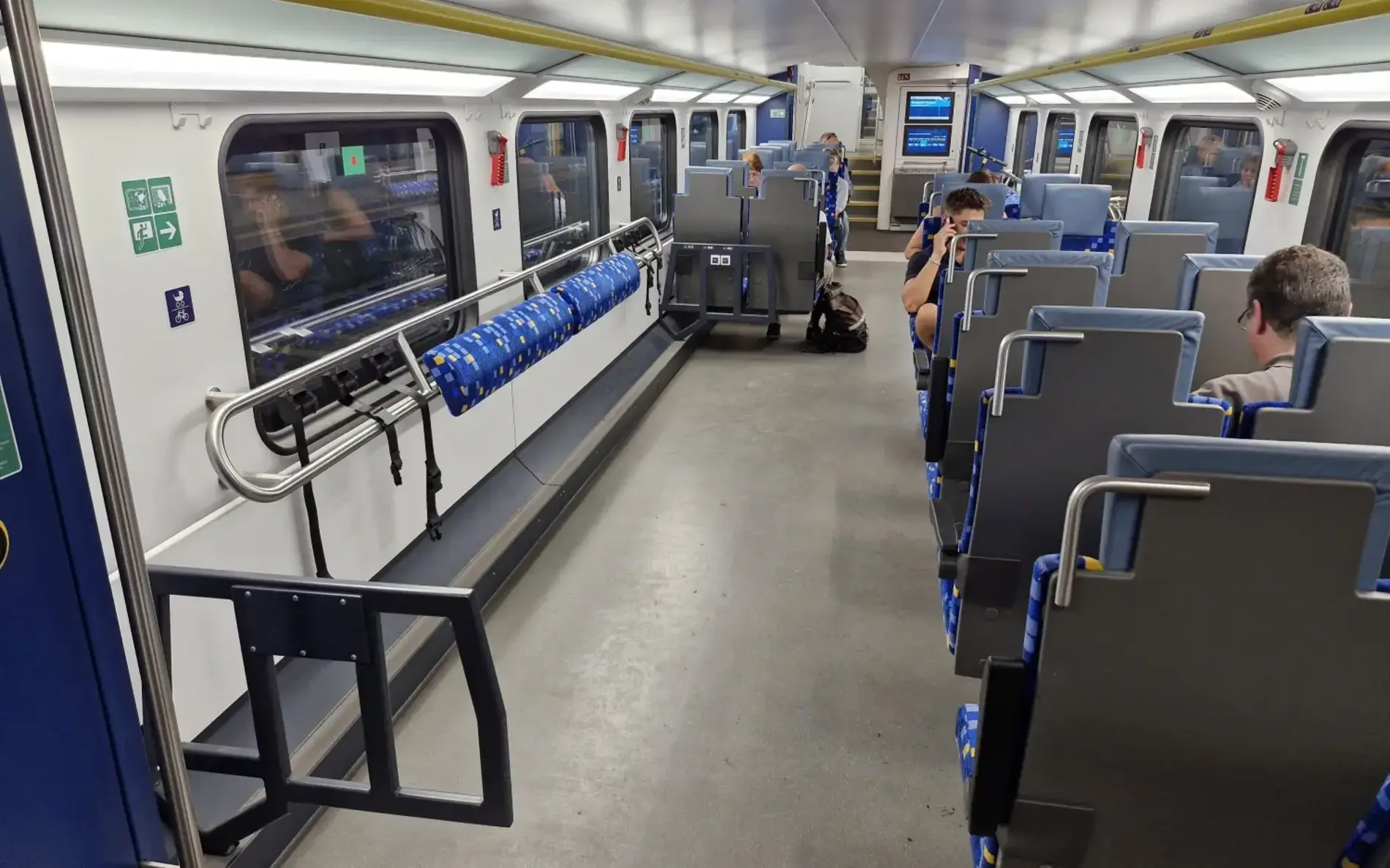
Modern train design plays a crucial role in supporting the integration of active and public transport modes. Trains equipped with dedicated spaces for bicycles, scooters, and strollers make it easier for passengers to combine cycling or walking with rail travel. Low-floor designs and wide doors improve accessibility and reduce boarding times, while clear signage and open layouts enhance passenger comfort. Incorporating flexible interior layouts allows for seasonal or regional adjustments in capacity, ensuring that trains can adapt to varying passenger and bike-transporting demands.
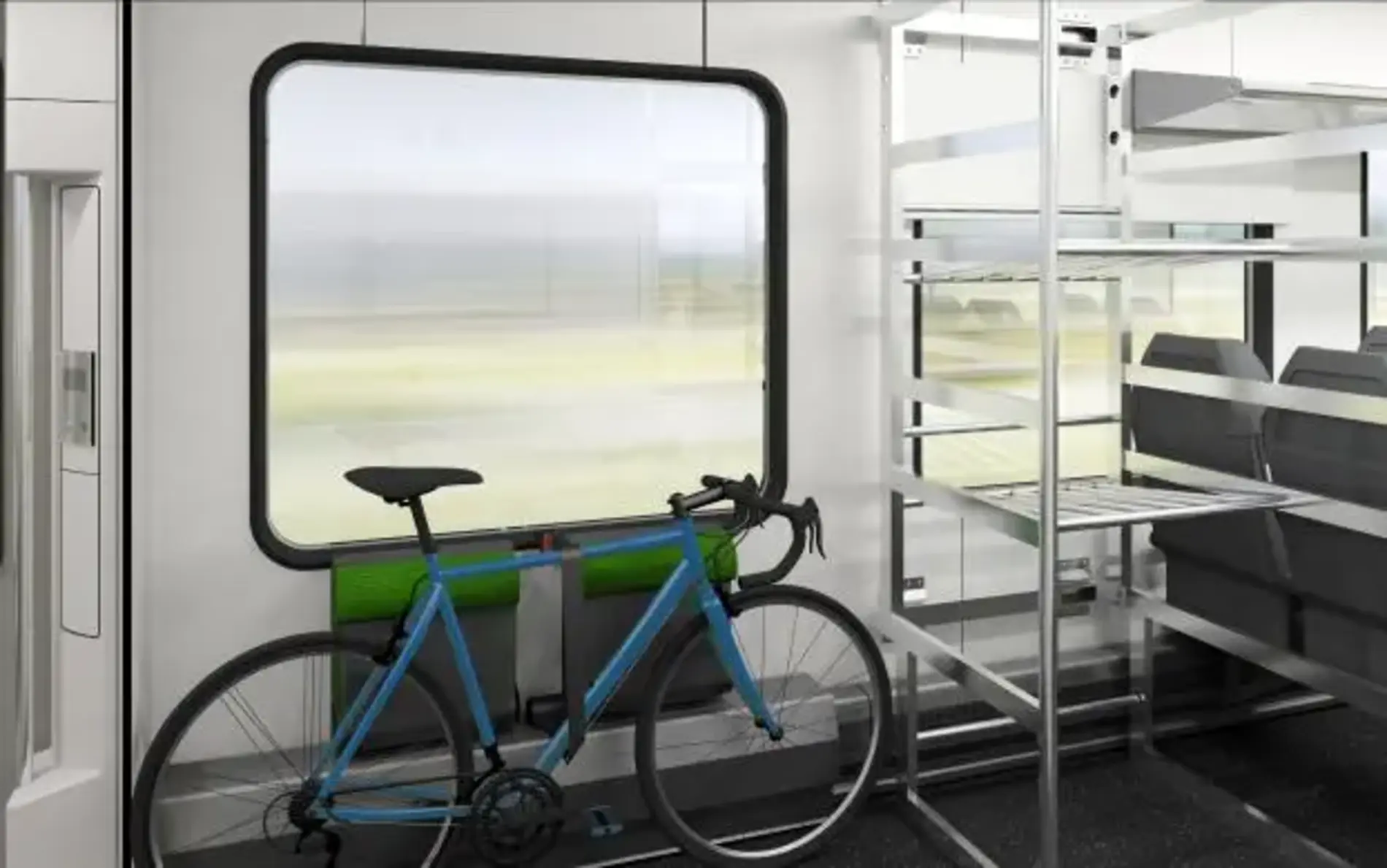
Flexible train interiors are key to supporting both cyclists and regular passengers. Today, bicycle transport is still highly seasonal, with strong peaks during warmer months. However, the goal is to create a more balanced year-round system. Adjustable seating, foldable racks, and reconfigurable spaces allow trains to accommodate bicycles, scooters, strollers, or luggage without to sacrificing a lot of seats and compromising comfort. This flexibility enables operators to adapt to varying passenger needs—whether it’s cyclists in summer or more seated travelers in winter—ensuring smooth passenger flow during peak hours, seasonal shifts, or special events. By balancing space for active mobility and seated passengers, flexible layouts make multimodal travel practical, convenient, and comfortable for all users.

Efficient space planning for flexible multi-purpose spaces on trains
3D visualization in GYSEV’s Stadler InterCity project ensured accurate spatial planning, ergonomic seating, and aesthetic harmony while revealing technical conflicts early. It improved stakeholder communication, reduced possible redesign time risks, and kept the project on schedule, resulting in safe, comfortable, and passenger friendly train interiors.
Bus Design Solutions for Bicycle Transport
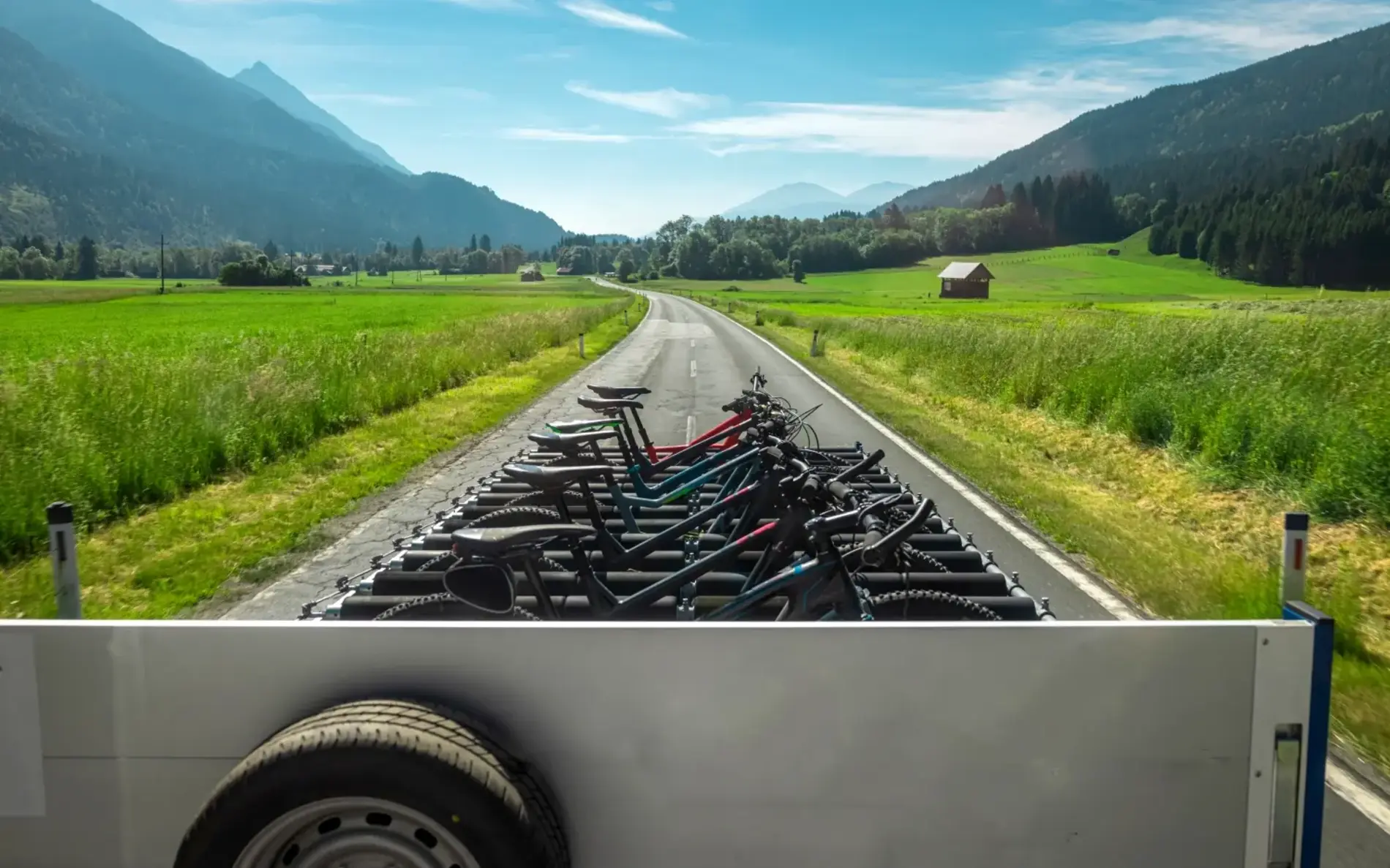
All in all, there are three main ways to transport bicycles on buses. The first is providing space inside the vehicle, as seen in Aarhus city buses in Denmark. The second is installing external racks at the front or rear of the bus, such as those used by FlixBus. The third solution involves attaching dedicated bike trailers, which can carry several bicycles at once and are ideal for routes with high seasonal demand.
Buses designed with internal bike areas—often achieved through foldable seats, open spaces, or flexible layouts—offer the most integrated and weather-protected solution. This approach ensures that bikes are easily accessible and secure during the journey, supporting smooth first- and last-mile connections. However, the main drawback is limited capacity: when space is shared with standing passengers, strollers, or luggage, accommodating bikes can become difficult during peak hours.
External racks provide a simple, cost-effective way to transport bikes without taking up interior passenger space. They are ideal for intercity or regional routes where boarding frequency is lower. Their visibility makes them user-friendly, but loading and unloading can take time, and bikes are exposed to weather conditions. Additionally, some regulations or safety constraints may limit the number or type of bikes that can be carried externally.
Dedicated trailers can transport a high number of bicycles, making them especially useful on routes with strong seasonal demand—such as tourist or recreational corridors. They allow buses to maintain full interior capacity for seated passengers. The downside is that trailers require additional maneuvering space, longer boarding times, and may not be suitable for dense urban environments. Nevertheless, they provide an effective, scalable option for regions promoting active mobility and tourism.
Together, these three approaches demonstrate how combining thoughtful bus design with flexible bike transport options can make multimodal travel more practical, inclusive, and sustainable.

Bike bus Bregenzerwald
During the summer months, the bike bus connects the Rhine Valley with many places in the Bregenzerwald mountain region. Cyclists can reach the region or cover uphill sections within the region by bus. The bikes are transported on a bike trailer that has space for 20 bikes (including e-bikes).
Integrating Cycling with Trams, Metros, and Ferries
Beyond trains and buses, other public transport vehicles—including trams, metros, and ferries—can be designed to better support active travel. Trams, often operating in dense urban areas, can provide valuable short-distance connections when equipped with low floors, wide doors, and clearly marked spaces for bicycles. Allowing bikes during off-peak hours or in specific tram sections helps balance demand and passenger comfort. Metros, meanwhile, offer high-capacity, high-frequency services that can extend the reach of cycling networks in large cities. Integrating lifts, ramps, and barrier-free access points in metro stations ensures smooth transfers for cyclists and passengers with mobility aids. Clear signage, adaptable interiors, and secure storage areas across all these modes enhance convenience and safety, making multimodal journeys more practical and appealing for everyday users as well as visitors.
Ferries and other waterborne transport can play a crucial role in connecting active and public travel. In many regions, ferries provide essential links across rivers or bays where bridges are unavailable, offering vital connections for cyclists and pedestrians. These routes can be especially important for cycling tourism, enabling continuous bike journeys along scenic or regional routes without detours. Bicycle-friendly decks, accessible boarding ramps, and dedicated storage areas allow passengers to bring their bikes on board, seamlessly linking cycling paths with regional and public transport networks. By accommodating active travelers, ferries expand mobility options, reduce car dependency, and contribute to a more sustainable and integrated multimodal transport system.

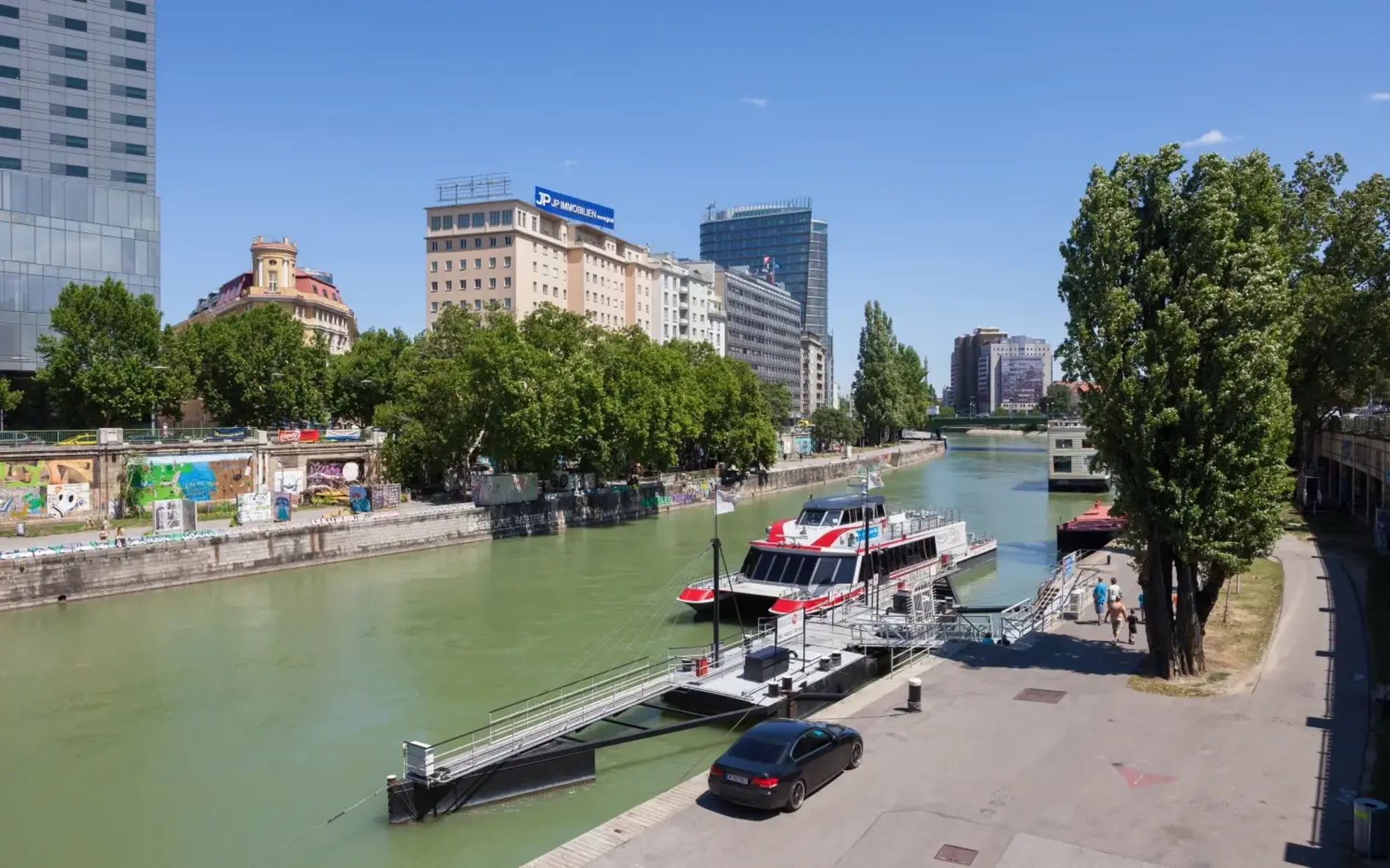
The Twin City Liner
The Twin City Liner is a fast, scenic passenger boat connecting Bratislava and Vienna in about 75 minutes. Running regularly, especially in tourist season, it offers modern amenities, bike racks, and outdoor seating, providing a relaxing alternative to road or rail travel.

The project Active2Public Transport is supported by the Interreg Danube Region Programme project co-funded by the European Union. The project was initiated by the Austrian Federal Ministry of Innovation, Mobility and Infrastructure (BMIMI), Department II/6 in cooperation with klimaaktiv mobil – the Austrian Federal climate protection initiative on sustainable mobility.