
Information and orientation
Providing clear information, maps, online route planning, booking system, and mobile apps makes it easier for users to combine active and public transport. These tools improve journey planning, reduce uncertainty, support multi-modal trips, and encourage sustainable, convenient, and user-friendly mobility.
Information to Users and Maps: Online and Offline
Providing clear and accessible information is essential for supporting active and public transport integration. Maps whether printed at stations or available online, help users understand routes, connections, and first- and last-mile options, reducing uncertainty and travel stress. Effective information includes not only routes but also service frequency, accessibility features, and points of interest such as bike racks, bike parking facilities, pedestrian paths or water points.
Both online and offline maps increase user confidence and enable better planning. Digital maps allow for real-time updates and quick access from everywhere, while offline or printed maps ensure accessibility for those without mobile devices or internet access. By offering comprehensive and user-friendly information, transport authorities make it easier for travelers to combine active modes with public transport, encouraging multi-modal journeys and sustainable mobility.

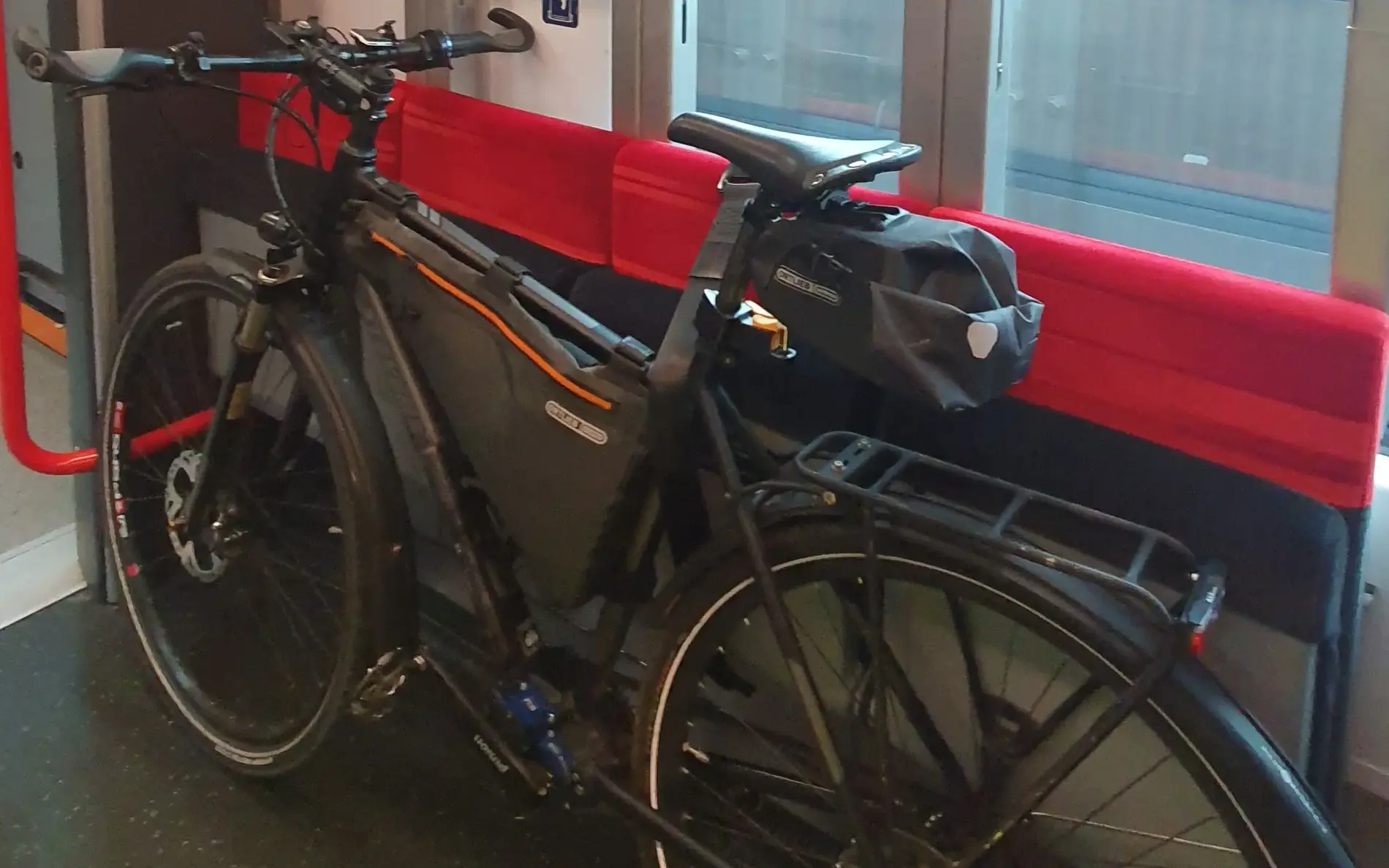
Bwegt Fahrradmitnahme
Bwegt Fahrradmitnahme is a Baden-Württemberg initiative promoting bike-friendly public transport, allowing bikes on trains, trams, and buses. It supports sustainable travel, cuts emissions, and encourages healthy, active commuting by combining cycling with public transit.
Online Route Planning and Booking
Online route planning with booking tools makes it easier for users to combine active and public transport. They allow travelers to find optimal routes, check schedules, compare travel times, and plan first- and last-mile connections efficiently. Integrated booking platforms can also facilitate multi-modal trips, including bike-sharing or e-scooter rentals, helping users navigate through complex networks with minimal effort.
These tools support convenience, reduce travel friction, and increase public transport attractiveness. By integrating ticketing and route planning into one platform, operators can improve ridership, enhance user satisfaction, and encourage sustainable transport choices. Reliable digital planning and booking systems help travelers make informed decisions and strengthen the link between active and public transport modes.

Budapest GO route planning website
The Budapest GO website (futar.bkk.hu) is a route planner tool that allows travellers to plan their journeys by walking, cycling or public transport. While it has a number of great features, the unique feature that makes it a good practice is the trip planning mode that plans trips using Budapest's public shared bike system (Bubi).
Mobile Apps
Mobile apps are powerful tools for supporting active mobility and public transport integration. They can provide real-time information, personalized route suggestions, alerts for service changes or booking system, helping travelers adapt on the go. Apps can also include features such as bike-sharing availability, step counters, and reminders for first- and last-mile options, making active travel more convenient and engaging.
Beyond navigation, mobile apps enhance user experience and could promote sustainable mobility habits. They also allow operators to collect anonymized data on travel behavior, which can improve service planning and infrastructure investment. By combining information, booking, and active travel features in a single app, users can enjoy a smooth, flexible, and reliable multi-modal journey.

Nicht ohne mein Rad - ”Not Without My Bike”
Nicht ohne mein Rad means “Not without my bike”. Trufi’s app for Hamburg, Germany is made for everyday bicycle users who also want to use public transport a little – or a lot – but never without their bike.
Learn more

The project Active2Public Transport is supported by the Interreg Danube Region Programme project co-funded by the European Union. The project was initiated by the Austrian Federal Ministry of Innovation, Mobility and Infrastructure (BMIMI), Department II/6 in cooperation with klimaaktiv mobil – the Austrian Federal climate protection initiative on sustainable mobility.