E-bike charging on Italian regional trains
Growing popularity of e-bikes
The growing popularity of e-bikes increases the need for flexible, easily accessible charging points, extending their range and boosting rider confidence.
Charging during the train ride
E-bike charging on trains or at stations extends range, prevents low-battery issues, and encourages sustainable, car-free commuting.
Ensure safety and comfort for passengers
Ensures passenger safety and comfort throughout all stages of the journey.
Quick-win solution for public transport operators
Quick-win solution, simple to implement with high user benefits for operators.
Challenge addressed: Growing popularity of e-bikes
With the growing popularity of e-bikes, many cyclists rely on them for longer commutes, including journeys that combine cycling and train travel. However, E-bikes often have a limited range, especially on longer commutes or in hilly areas. Charging during the train journey enables cyclists to extend their trips and makes e-bikes a more viable option for longer distances. In addition, access to charging at stations or on trains can prevent cyclists from being stranded or forced to seek alternative transport when battery levels are low.
Solution implemented: Charging during the train ride
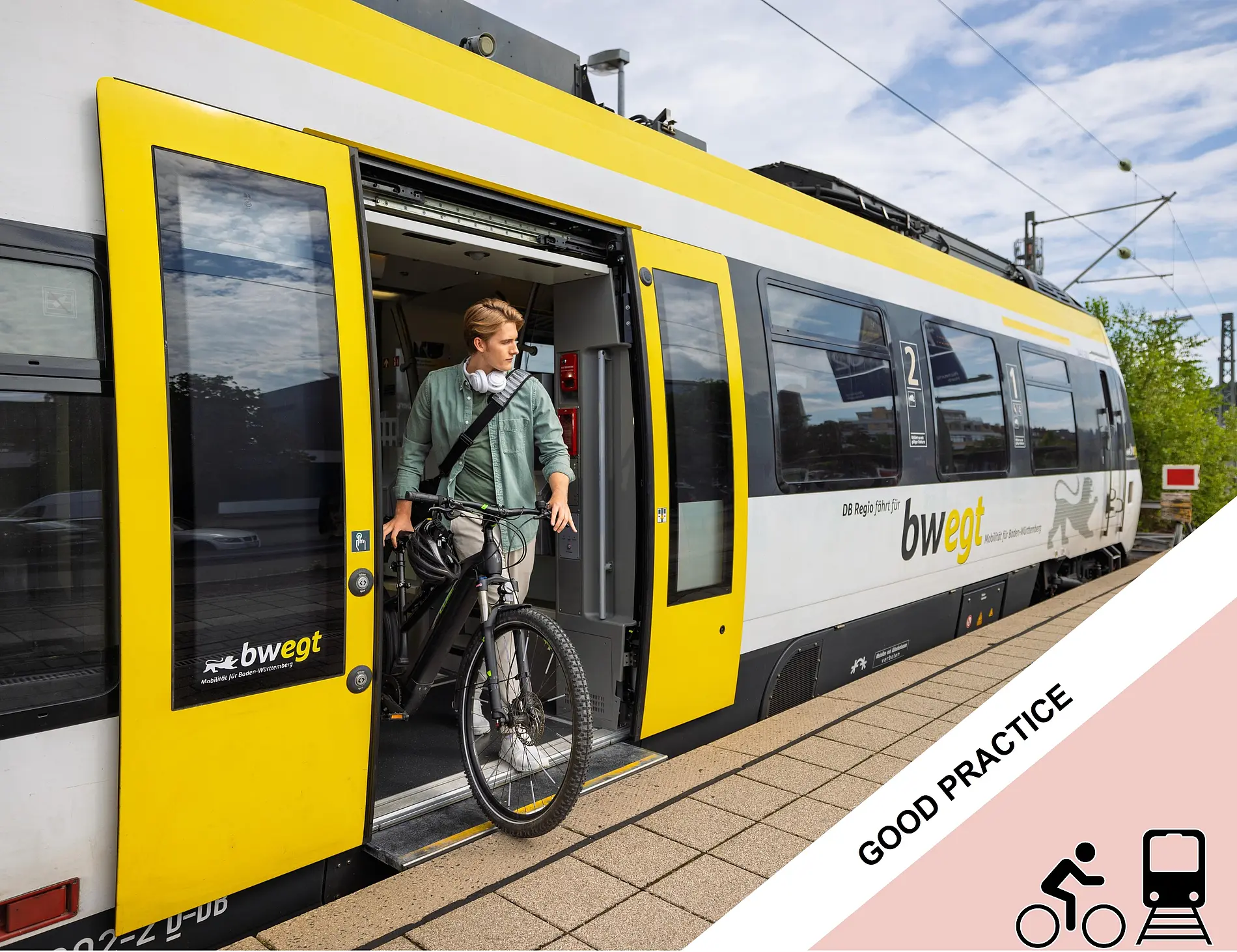
Charging an e-bike during the train ride allows commuters to take longer or hillier routes, extending the practical range of e-bikes. It is also particularly useful in cases of miscalculation when someone arrives at a train station with a very low battery level. By making e-bike charging more convenient, more people may choose to ride bicycles instead of cars, helping to reduce traffic congestion and carbon emissions. This approach aligns with many cities’ goals to promote sustainable and green mobility.

Results achieved: Ensure safety and comfort for passengers
This practice is considered effective because it directly addresses a key barrier to e-bike use, limited range, and the uncertainty around it. By providing charging options on trains, it makes longer commutes by e-bike more feasible and reliable in everyday use. This, in turn, extends the practical reach of stations, allowing more people to combine cycling with public transport. With this practice the operators ensure safety and comfort for passengers across all stages of the journey.
Lessons learned: Quick-win solution for public transport operators
This practice represents a quick-win solution for public transport operators due to its simple implementation and high user benefit. Installing charging points near bicycle racks requires minimal investment while significantly enhancing the user experience. Enabling charging on trains strengthens the integration of cycling and public transport, supporting more seamless, flexible, and attractive multimodal commuting.

Learn more